Homing in on architectural styles through the ages
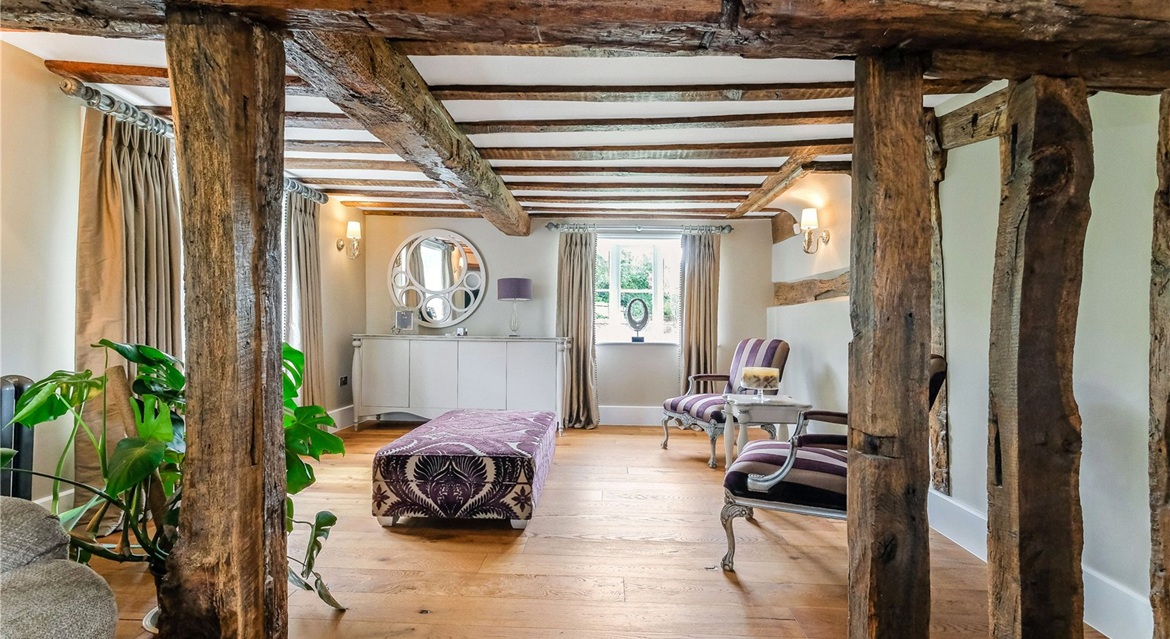
Interested in the architectural style of your home, or one you might be buying? Here we look at the ever-evolving, ever-changing designs and characteristics of British houses from Tudor times to modern minimalism.
Tudor
At a time when classical art and architecture were flourishing in parts of western Europe, British housing in the 16th century was more functional with little in the way of embellishment. An exception can be found in the period’s decorative chimneys, whilst other defining characteristics of Tudor buildings include tall, narrow windows, arched doorways, and half-timbering. The close studding, or tightly set vertical timbers, denoted wealth in homes found in the south and east of England.
There is a style – sometimes called Tudorbethan – relating to half-timbered frontages that can be seen in the buildings around Lavenham’s historic Market Square. While Tudor houses offer romantic charm and unique character, they tend to come with rather a lot of maintenance and high running costs for heating, whilst timber degradation can require costly specialist repairs.
Alex and Oli Khalil-Martin live in one of Suffolk’s landmark Tudor buildings, The Crooked House in Lavenham. Very much committed to the authenticity of their medieval home, they live without central heating, a television and other modern day luxuries.
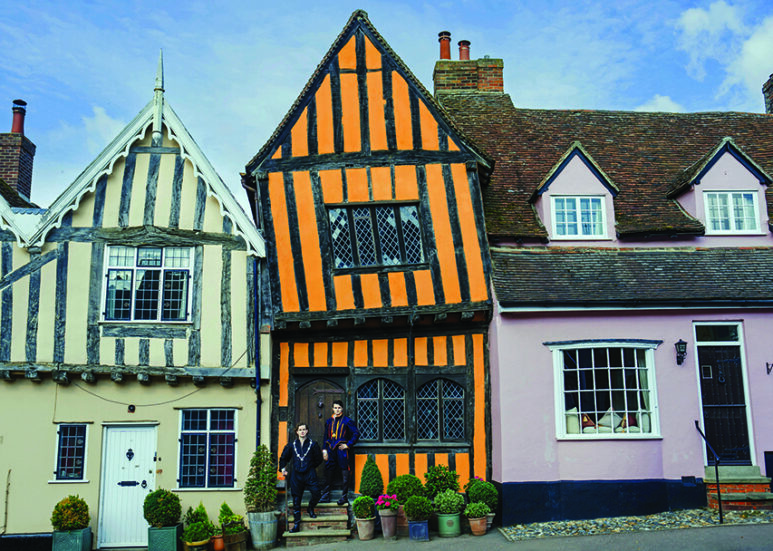
Alex and Oli Khalil-Martin outside the Crooked House in Lavenham. Image: James Davidson Photography
Oli commented “In winter we simply layer up, just as the first owners of the house would have done back in the 14th century, but it can be draughty. Too much central heating would, over time, damage the timbers.” The couple often dress in wool merchant costumes to keep warm and entertain guests attending their popular 75-minute house tours and dinner evenings.
Georgian
If the Tudor period borrowed little from Europe, that was to change from 1714-1790. The early stages of both the Agricultural and Industrial Revolutions brought about a new middle class who rather liked the Palladian style of buildings designed by Italian architect Andrea Palladio and the work of Inigo Jones.
Homes, especially in and around a fast expanding London, became refined and elegant. Their main features were high ceilings, spacious rooms and large sash windows which allowed light to flood in. Add in decorative features like fireplaces and cornicing, and it is small wonder these homes were highly desirable. A fine example is Ickworth House, with its Italian-inspired rotunda, whilst the High Street in Dedham is home to some beautiful Georgian architecture. On the flip side? Georgian homes can be susceptible to subsidence and a lack of damp proofing.
Victorian
With Victorian homes came the arrival of some exciting new additions – the likes of flushing toilets, gas lighting and inside bathrooms. Designs were asymmetrical and brick was fashionable again, with an appreciative nod to Gothic and Classical architecture.
Though much of the working population lived in either small cottages, or back-to-back terraced houses, those with some wealth dallied with lavish decoration and colourful brickwork. Their ornate details combined with quality materials and solid builds make them desirable, though, as with most old properties, energy efficiency can do with some improvement.
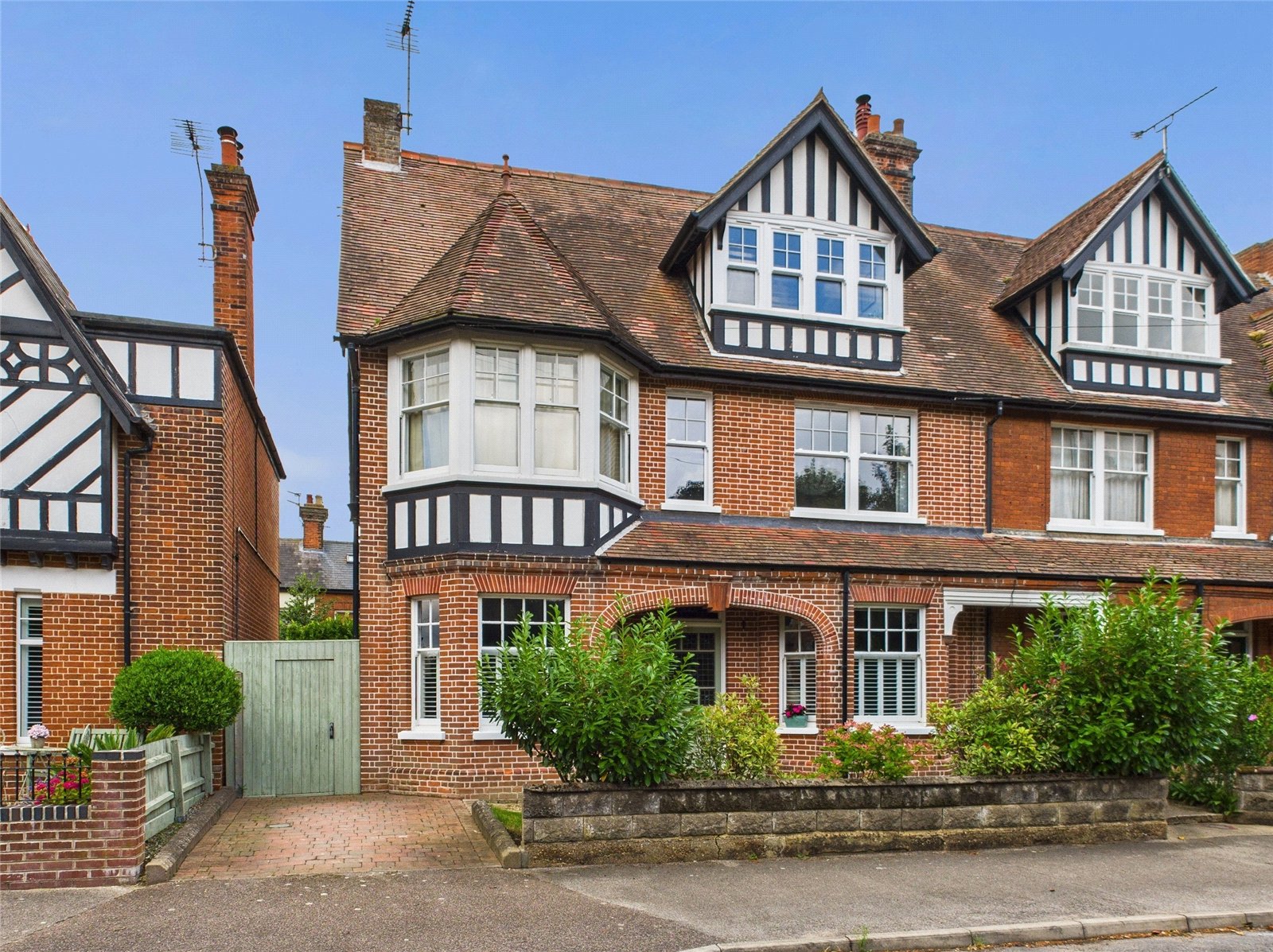
Dating to the late-19th century, this impressive property in Felixstowe offers kerb appeal and grand proportions. Find out more here.
Edwardian
Not a fan of pebbledash? Blame the Edwardian era. It was during this time that the Arts and Crafts movement led to a rise in vernacular architecture and timber framing, with pebbledash and hanging tiles becoming prevalent on most Edwardian terraces. Look out too for carved porches and black and white ceramic tiles which were popular in the early 1900s.
These properties provide flexible layouts suitable for modern renovations, with loft conversions and skylights sometimes added. Furthermore, their large square bay windows, parquet floors and decorative fireplaces hold much appeal for today’s home buyers.
1930s semis
Perhaps one of the most common architectural styles you will see in Britain today, in fact they defined the image of the nation’s suburbia during a housing boom. At this time, land around new transport links such as railways and tram lines, could be purchased at low prices thus it made economic sense to build homes on these sites.
These semi-detached houses often feature curved bay windows, hanging tiles and recessed porches. Many have since been extended and modernised to create contemporary family homes.
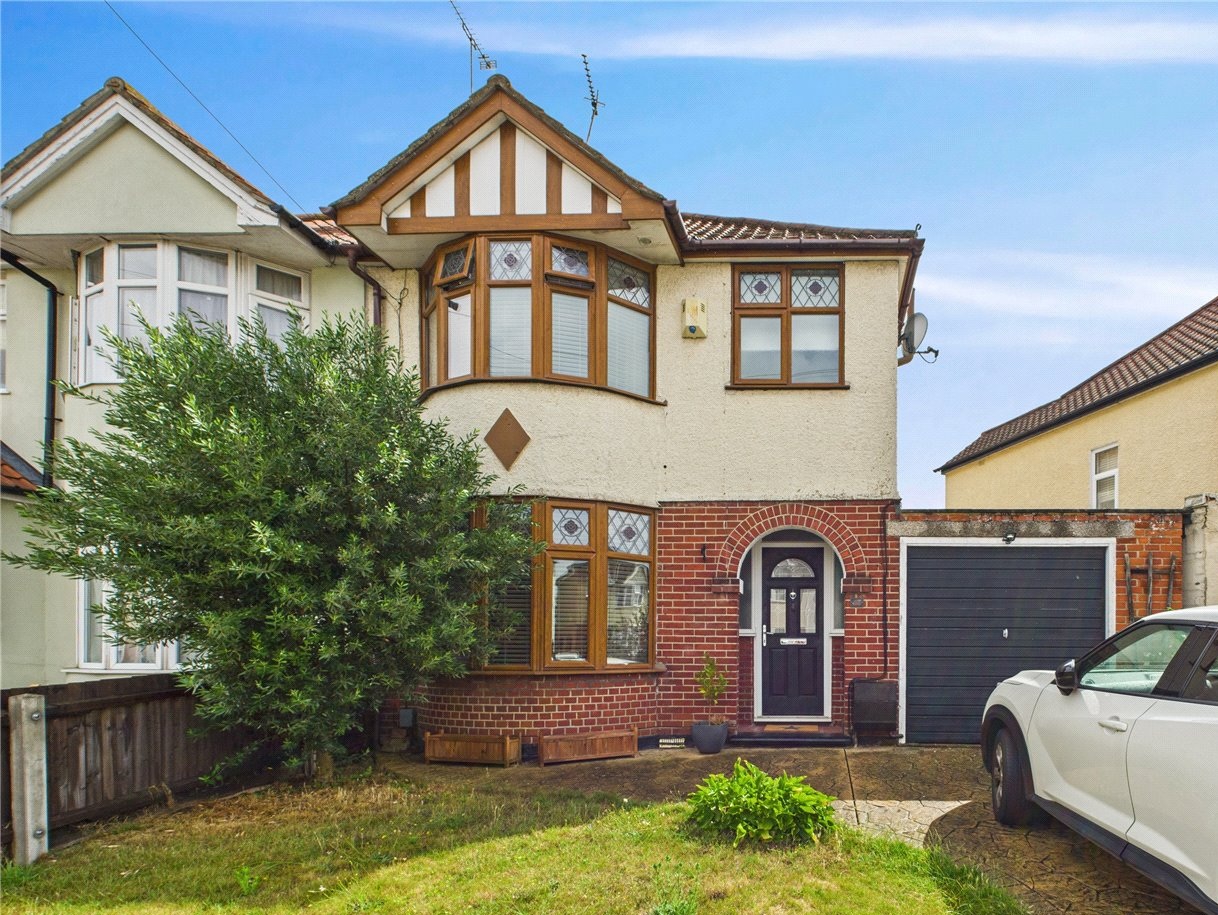
This 1930’s semi-detached property in Ipswich has three bedrooms and has been extended. Find out more here.
Modern
The appeal of traditional features has never really gone away for home buyers, so even in the 1990s a lot of new builds still resembled older buildings, at least outwardly. Inside, insulation of walls and loft spaces, along with double glazing, were becoming important. To avoid too much uniformity, new build estates were laid out in angles or planned to resemble small villages.
In the current climate there is a desire for more sustainable, environmentally friendly places to live; rooms especially planned for their light and shade. Solar panels have also entered the equation and the need for thermal efficiency has been met by improved double and triple glazing technology. A minimalist style has been ushered in by architects looking to shape the homes of today and tomorrow.
If you are thinking of moving and would like a free, no obligation market appraisal, please get in touch using the link below or contact your local branch. Whether you are looking for a historic home or modern masterpiece, browse properties currently on the market with Fenn Wright below:
Find out how much your home is worth
Get in touch with your local branch
See all properties available for sale
*The lead image is from a beautiful Grade II Listed property that has been comprehensively refurbished, occupying a glorious setting in Great Braxted. More details can be found here.